
Powering Clean Water Systems: Role of Talent Services in Wastewater Treatment Operations

Powering Clean Water Systems: Role of Talent Services in Wastewater Treatment Operations

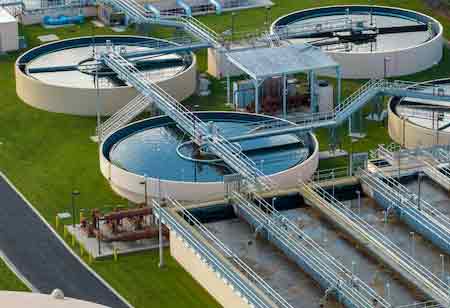
The wastewater treatment sector sits at the foundation of public health, environmental protection, and sustainable urban development. As populations grow, industries expand, and environmental regulations tighten, wastewater treatment facilities face increasing operational complexity. Many utilities confront workforce shortages, aging staff, and rapid technological change. Talent services now play a strategic role in helping utilities, municipalities, and private operators maintain compliance, adopt new technologies, and ensure uninterrupted water treatment performance.

Advancing Grid Reliability Through Integrated Spacer Cable Systems

Advancing Grid Reliability Through Integrated Spacer Cable Systems

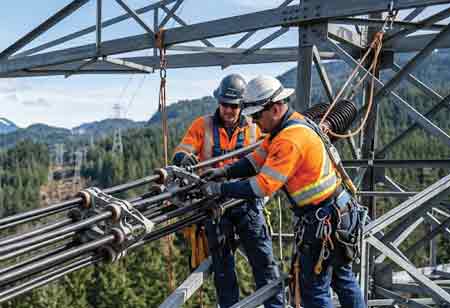
Electric utilities face a convergence of pressures that challenge conventional distribution and transmission design. Aging infrastructure, constrained rights-of-way and rising demand from electrification and data-intensive industries are forcing leaders to rethink how capacity, reliability and long-term cost are managed. Incremental upgrades to legacy bare wire systems no longer deliver sufficient performance as exposure to vegetation, weather variability and congestion continues to rise.

Underground Infrastructure Construction: Advancing Efficient Utility Network Installation

Underground Infrastructure Construction: Advancing Efficient Utility Network Installation

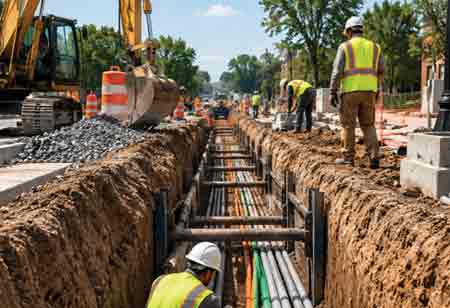
Underground utility construction solutions operate within infrastructure environments where precision, spatial coordination, and long-term reliability directly influence how essential services are delivered and maintained. Utility corridors beneath urban and industrial landscapes accommodate networks related to water distribution, energy transmission, telecommunications, and wastewater management, all of which require careful installation within confined and often congested underground conditions.

Choosing Underground Utility Construction That Keeps Projects Moving

Choosing Underground Utility Construction That Keeps Projects Moving

Underground utility construction is often judged by price before it is judged by consequence. A lower bid can look attractive on a spreadsheet, yet the real cost appears when crews wait, lots remain unfinished, inspection dates slip and a developer loses control of the build sequence. In utility work, value is measured less by the number on bid day than by whether the contractor can finish the scope and correct issues quickly enough to protect the next phase. Executives assessing this field should look beyond capacity claims and ask how decisions are made when a problem emerges in the field. That question also extends to inspections, site access, weather windows and crew sequencing because each delay can compound across the larger development schedule.

Adapting to Change: The Role of Spacer Cables in a Modern Energy Landscape

Adapting to Change: The Role of Spacer Cables in a Modern Energy Landscape

The utilities sector is undertaking a thorough reassessment of grid resilience, reliability, and long-term operational stability, driven by shifting energy demand patterns. These pressures are significantly influencing procurement strategies, project planning timelines, and supplier relationships, thereby redefining market dynamics. The industry is now engaged in a comprehensive discourse regarding grid modernization and environmental sustainability, which has resulted in elevated expectations for the components supporting transmission and distribution networks.

Addressing Talent Shortfalls Without Compromising Oversight

Addressing Talent Shortfalls Without Compromising Oversight

Executives responsible for acquiring talent within wastewater treatment face a tightening equation. The workforce that sustains regulatory compliance continues to shrink. Certified operators are aging out faster than replacements can enter, creating exposure that extends beyond hiring delays into continuity risk. When treatment facilities lack credentialed coverage, even briefly, the consequences extend to public health oversight, permit standing, and community trust. This imbalance has shifted talent from a staffing consideration into a continuity safeguard.